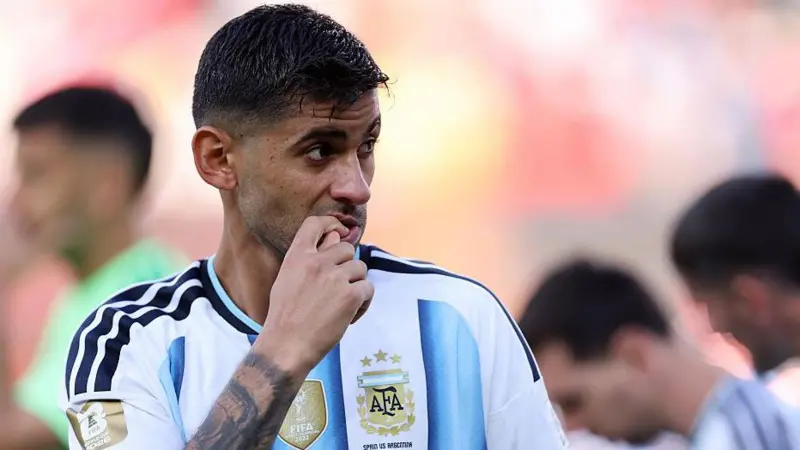
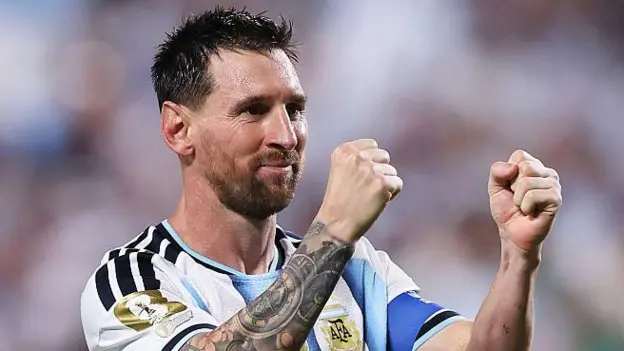
Atletico Madrid have held talks over a move for Tottenham captain Cristian Romero.
The Argentina international, who signed a new four-year deal at Spurs last August, is expected to leave the club this summer.
There has also been interest from Inter Milan in signing the 28-year-old, who played all seven matches in Argentina's run to the World Cup final last month, where they lost to Spain.
But Romero is a long-term target for Atletico manager Diego Simeone, with the Spanish side believed to be pressing ahead with another attempt to sign the centre-back.
Spurs are aware of Atletico's interest and an agreement on personal terms for the player will not be an issue.
Spurs boss Roberto de Zerbi recently said he would "respect the will" of players if they wanted to leave.
Romero missed the end of last season with a knee injury as Spurs avoided relegation on the last day.
He was sent off twice last season as Spurs finished 17th.
Meanwhile, fellow centre-back Micky van de Ven is close to agreeing a new five-year deal with Tottenham....
England footballer Toney charged with assault in Soho
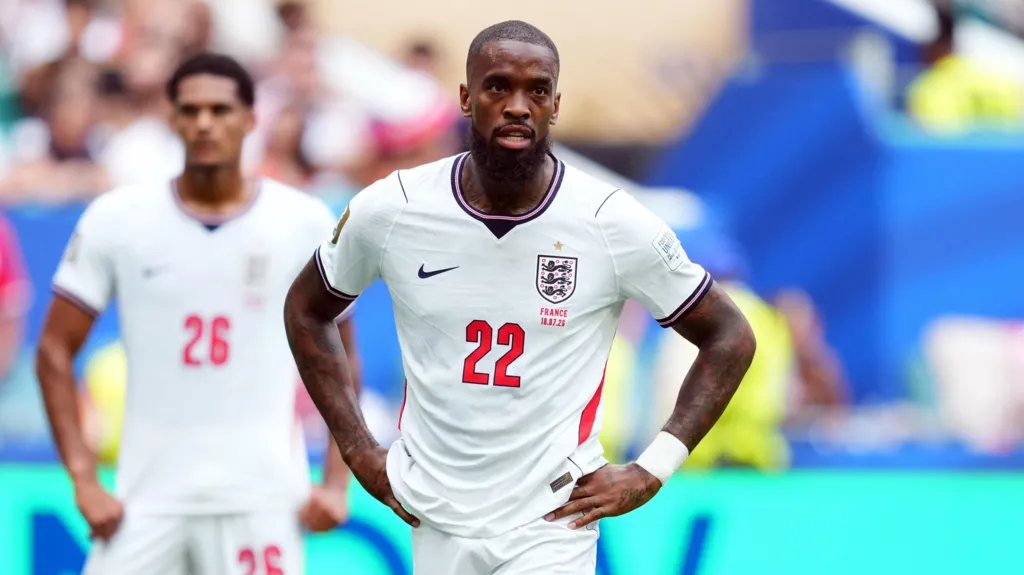
England footballer Ivan Toney has been charged with assault at a nightclub in central London.
The 30-year-old, who plays for Saudi Pro League club Al-Ahli, was charged on 31 July following an incident on Wardour Street in Soho on 6 December.
The former Brentford striker, who started England's 6-4 win over France in the "bronze final" of the World Cup last month, has been charged with assault causing actual bodily harm and is due to appear at Westminster Magistrates' Court on 24 September.
A spokesperson for Toney said: "Ivan acknowledges the charge and although he is naturally shocked, he looks forward to being given the opportunity to clear his name in court."
After starting his career at Northampton Town, the striker had permanent spells at Newcastle, Peterborough and Brentford before moving to Saudi Arabia in 2024.
He was a surprise selection for England's World Cup squad but apart from the France game, his only other appearance was as a late substitute in the 2-1 semi-final defeat to Argentina....
Barca cancel friendly in Morocco after Ceuta border crisis
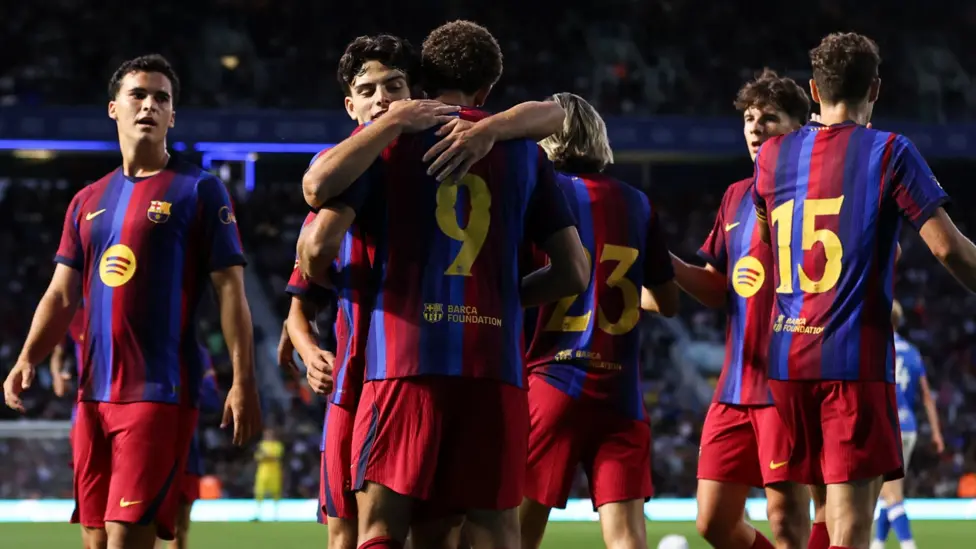
Barcelona have cancelled a pre-season friendly in Morocco because of the ongoing border crisis in Ceuta.
The Spanish champions were set to face local side Ittihad Riadi Tangier in north-western Morocco on 15 August as part of their preparations for the new campaign.
"In light of the current uncertainty and circumstances, FC Barcelona considers playing the match would be inappropriate," said the club in a statement.
While the club did not specify the reason for the cancellation, BBC Sport understands the decision is linked to the situation in Ceuta, the Spanish enclave that borders Morocco on the North African coast.
About 78,000 migrants crossed into the Spanish territory from Morocco by sea last week, resulting in 100 deaths and sparking tensions among EU nations who share open borders.
While a large majority of the migrants have since returned to Morocco, between 3,000 and 5,000 still remain in Ceuta.
Italy had suspended its Schengen arrangement with Spain, backed by Finland and Denmark, while the Czech Republic called for Spain's membership to be temporarily suspended.
Barca also had a friendly with Preston North End cancelled after a pre-season training camp in the UK, where they played Birmingham City.
They are scheduled to face Nottingham Forest on Saturday in the Italian city of Udine and will also host Egypt's Al Ahly on 19 August.
Hansi Flick's side will begin their La Liga title defence against Elche on 23 August....
Changes called for as Sinner and Djokovic withdraw
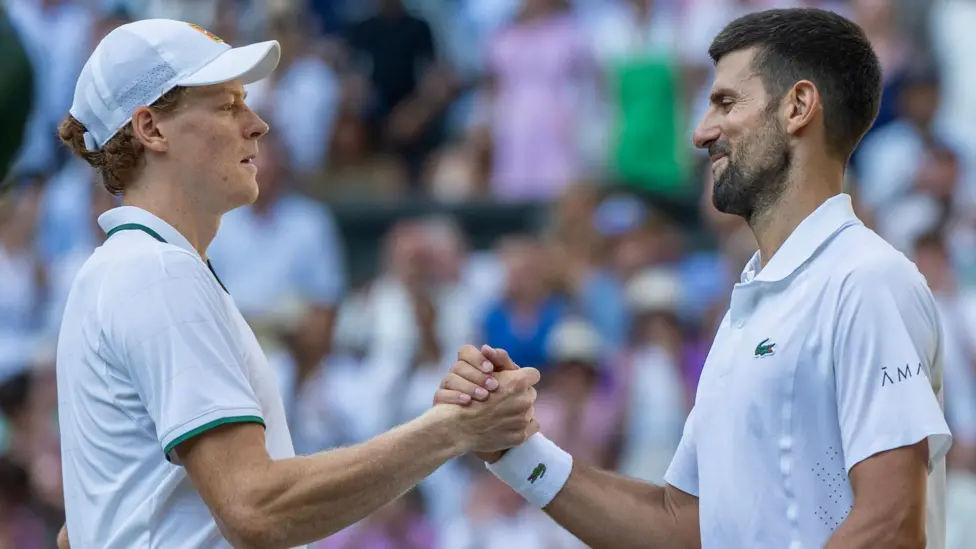
The tournament director of the Canadian Open says changes need to be made to the "demanding schedule" of players after Jannik Sinner and Novak Djokovic pulled out of the Masters 1000 event.
Sinner, who beat Alexander Zverev to win the Wimbledon title this month, said he had withdrawn from the ATP tournament, which takes place from 2-13 August in Montreal, to prioritise his health.
Carlos Alcaraz will also be absent from the Canadian Open as he continues his recovery from a wrist injury that has kept him out since April.
"We are obviously very disappointed that Jannik and Novak won't be joining us in Montreal this year, especially after they also withdrew from last year's tournament in Toronto," said the Canadian Open's tournament director Valerie Tetreault.
"We respect their decisions and understand that, with such a demanding schedule, players' health must remain the priority.
"That said, we believe the frequency of these last-minute withdrawals in the last few years raises a broader issue for our sport.
"Masters 1000 events are among the flagship tournaments on the tour, and fans rightfully expect to see the world's best compete.
"We are already in discussions with the ATP to ensure this matter received serious consideration."
The Canadian Open takes place before the Cincinnati Open, which is also a Masters 1000 event, and prior to the start of the US Open - the final Grand Slam of the year - on 30 August.
Seven of the existing nine Masters 1000 events - the sport's highest level below the Grand Slams - are now staged over 12 days and concerns over the congested tennis calendar, which stretches across 11 months of the year for the top players, have regularly been voiced.
Britain's Jack Draper and Emma Raducanu recently pulled out of Wimbledon on the eve of their home Grand Slam because of injury.
Draper, who withdrew with a long-term arm injury, said he felt the amount of injuries suffered by leading players is "pretty worrying".
In September 2024, Alcaraz said: "They are going to kill us in some way."
"We firmly believe adjustments are needed in the near future to better protect the integrity of our Masters 1000 events while remaining mindful of the realities players face," added Tetreault.
Earlier this year, women's world number one Aryna Sabalenka and Iga Swiatek pulled out of the Dubai Championships, a WTA 1000 event, two days before it started.
Tournament director Salah Tahlak said players who made late withdrawals from tournaments should be docked points, while Sabalenka said criticism of her was "ridiculous" and that she may not play at the tournament again....
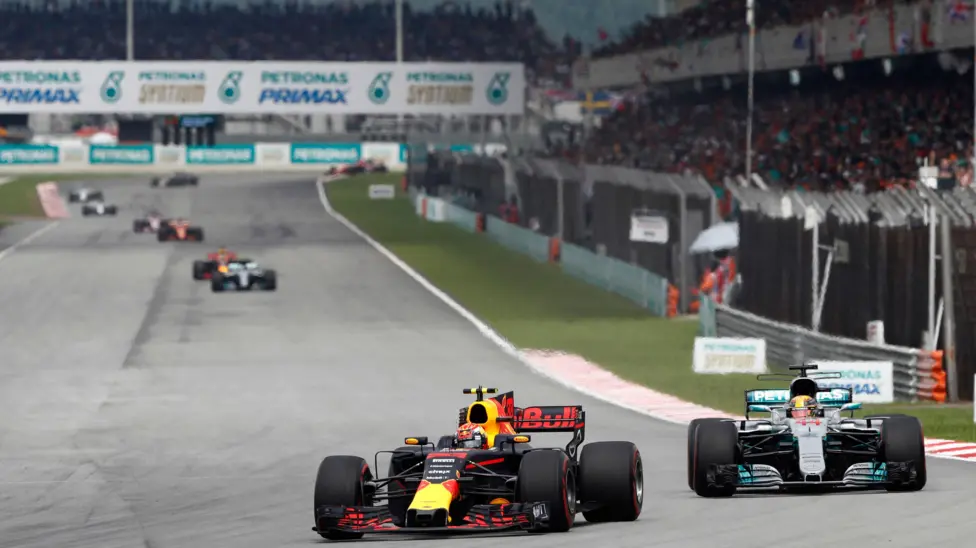
Malaysia set to host postponed Bahrain GP
Malaysia is set to hold a grand prix in October as a replacement for the Bahrain race that was called off earlier this season as a result of the war in the Middle East.
The Sepang track near Kuala Lumpur, which was last on the calendar in 2017, is expected to stage a race on behalf of Bahrain on 2-4 October, a week before the event in neighbour Singapore.
The race will be presented as the Bahrain Grand Prix being held in Malaysia.
The event is expected to be announced officially in the coming days, perhaps as early as Sunday.
It has been arranged by Formula 1, but has not yet been been through the formal sign-off process, which also includes governing body the FIA.
Bahrain and Saudi Arabia both had their April races postponed in March after the USA and Israel launched their war against Iran.
F1 had hoped that Bahrain could be reinstated in October. But with the deadline approaching by which a new date had to be confirmed for logistical reasons, and no sign of the war ending, a decision had to be made to race elsewhere.
When Malaysia is confirmed, it will mean races on three consecutive weekends in Azerbaijan, Malaysia and Singapore.
What about the end of the season?
The ongoing war also means there is uncertainty about the two season-ending races in Qatar and Abu Dhabi, scheduled for the final weekend in November and the first in December.
A decision on those does not have to be made until September but a number of alternatives are being considered.
If Qatar and Abu Dhabi cannot happen, the most likely track to host a race at the end of the season is Imola in Italy.
Imola staged the Emilia Romagna Grand Prix between 2020 and 2025 after previously hosting F1 between 1980 and 2006.
Portimao in Portugal and Istanbul Park in Turkey are also under consideration, but are significantly less likely.
Both tracks have construction work to complete before their official return to the calendar next year, and hosting a race in early December would significantly increase the difficulties in doing so.
The cancellation of the four Middle Eastern races would take what had been originally scheduled as a 24-race calendar down to 20.
F1 is keen to host at least 21 races, because any less than that would activate contractual clauses that could see the sport have to pay rights fees back to broadcasters and may also mean the same for teams with some sponsorship budgets....
How do Manchester City manage the Rodri dilemma?
Manchester City are in flux.
Replacing a manager after 10 years is no easy feat, let alone when there appears to be a squad overhaul too.
Four of the starters in City's Treble-winning side of 2022-23 - Manuel Akanji, Nathan Ake, Bernardo Silva and John Stones - have left this summer, with the Blues signing £116m Elliot Anderson and promising 17-year-old Jeremy Monga.
And the changes might not end there.
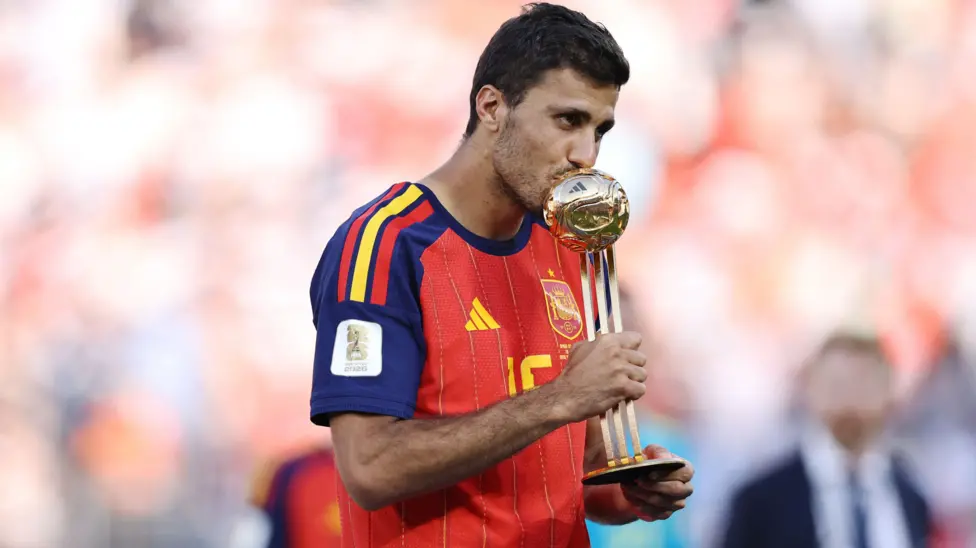
Fresh from captaining Spain to World Cup victory, Rodri will head for back surgery on Monday with just a year left on his contract, amid increasing speculation about his future.
It is not clear how long the 30-year-old will spend on the sidelines, but one thing new boss Enzo Maresca was clear on in his first news conference was that he wants to keep him.
But with reports that Real Madrid are "operating on the basis" of Rodri joining them,, external what do City do?
Will they look to cash in when Rodri returns to fitness, or keep to Maresca's stance?
And how might Maresca's midfield operate - with or without Rodri?
What's the background?
When Rodri returned from an anterior cruciate ligament injury last year, there will have been plenty who wondered whether he would return to the Ballon d'Or-winning levels he had reached at his peak.
Pep Guardiola - the man Maresca has replaced - said last October: "In the World Cup, he will be the best Rodri, and next season he will be the best Rodri."
Guardiola was proved right on the first count. Not only did Rodri captain Spain to World Cup success but he was also awarded the Golden Ball as the tournament's best player.
Maresca was unequivocal when asked for his view on Friday.
"I think every manager wants to have Rodri because he is a top player," he said.
"But now, surgery on Monday... he needs a holiday... he needs to rest and recover and then he will be back with us."
The plan seems clear, therefore - look to retain one of the best players in world football rather than sell him.
But there will have to be contingencies in place.
One of these will be the presence of Anderson, while City are monitoring 18-year-old Lille midfielder Ayyoub Bouaddi, who impressed for Morocco in the World Cup.
What does a Maresca midfield look like?
To understand how Rodri, Anderson and someone like Bouaddi might come together, it is key to understand Maresca's game model.
As a disciple of positional play, he draws comparisons between his football and chess.
"There are a lot of similarities," Maresca said. "The most important is positional play and strategy.
"For a coach, it's important to have the mentality of a chess player: develop a plan, study counter-moves, choose the arrangement of the pieces."
Maresca's strategy has largely been rooted in an on-the-ball shape that looks like a 3-2-2-3.
One of Rodri's most useful qualities in a Maresca side would be his ability to move between these predefined positions on the pitch.
Throughout the World Cup, for example, we saw him drop into the backline when former City team-mate Aymeric Laporte pushed up with the ball.
Naturally, Rodri spent most of the game in a holding midfield position, but when space opened up he was more than capable of pushing forward too....
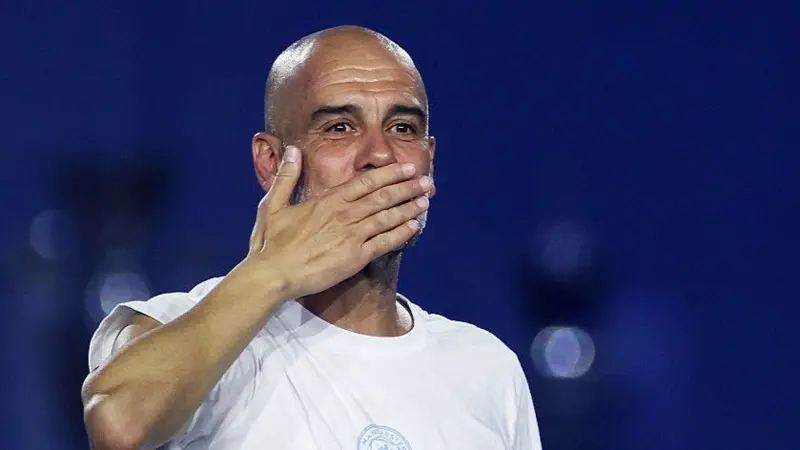
Guardiola turns down Italy manager job
Pep Guardiola has turned down the chance to coach the Italian national side.
Earlier this week, Italian Football Federation (FIGC) president Giovanni Malago said talks had been held with Guardiola, who left Manchester City this summer after 10 years, and that "exceptions" could be made for his salary.
On Thursday, FIGC technical director Paolo Maldini said Italy first approached their former player Carlo Ancelotti, who is currently in charge of Brazil.
Ancelotti has agreed to stay in post and now Guardiola has informed the FIGC he intends to continue with his plan to take a break from the game, which will allow him to rest, spend more time with his family and travel.
In addition to a huge salary, the FIGC is understood to have effectively told Guardiola he could shape the job as he saw fit, as they tried to tempt one of the most successful coaches in the game to take charge of a side that has failed to qualify for three World Cups in a row.
However, after taking some time to consider the situation, he has said no.
It means former Italy playmaker Andrea Pirlo, currently head coach of Dubai-based United FC, is the frontrunner to be tasked with navigating Italy through a Nations League group that includes France, Belgium and Turkey in the autumn and then try to qualify for Euro 2028.
...
Best team, moments, matches and players of World Cup group stage
After 72 matches across three countries, 48 teams who qualified for the 2026 World Cup have been whittled down to 32.
Records have been broken by some of the star players who have delivered on football's biggest stage, while new heroes have emerged.
A group of BBC reporters in the United States, Canada and Mexico have picked their best teams, players, matches and moments from the group phase.
Best team
Ian Dennis, BBC Radio 5 Live
France. I've seen all of their group games and they've made it three wins from three for the first time since they won the World Cup in 1998. They're still not perfect, so room to improve as they get stronger under a manager who has the experience to draw on, as Didier Deschamps seeks a third successive World Cup final.
Phil McNulty, BBC Sport's chief football writer
France. Just looking at their attack with Kylian Mbappe, Michael Olise and Ousmane Dembele and what it can do when it clicks - and the strength of Didier Deschamps' squad as a whole - makes me think they will be very difficult to stop. There are other strong contenders, but they are the most dangerous team in the tournament.
John Bennett, BBC World Service
After a sloppy start against Senegal, France exploded into life when Michael Olise was moved into the number 10 position. Their front four is frightening (with Desire Doue or Bradley Barcola), Kylian Mbappe's the happiest I have ever seen him at a major tournament, William Saliba is one of the best defenders at the tournament, unsung Adrien Rabiot links things brilliantly and there is also so much strength in depth. I saw them live twice, in New Jersey and Philadelphia, and I would be stunned if they do not make it to the final.
Alex Howell, BBC Sport's England reporter
France look like they are going to take some stopping. They have the best front three of the tournament and their strength in depth means that they can rotate as the tournament goes on. Kylian Mbappe is already firing and now he's up and running he will be hard to stop.
Liz Conway, BBC Sport journalist
I said Spain from the start and I'm going to stick with them. We still haven't seen them hit top gear and we know they have far more potential to show, especially with key players Lamine Yamal and Nico Williams coming back from injury. This is a long tournament and their momentum will build. They could face France in the semi-final, which would be a huge test, but if they can come through that I think they can go all the way.
Gary Rose, BBC Sport journalist
Lionel Messi is grabbing the headlines and rightly so with his six goals from three games so far at this World Cup, but it would be unfair to say Argentina are all about him and him alone.
Often a collection of brilliant individuals, this Argentina side looks more like an array of brilliant individuals who are playing as a team, and the result of that has been three wins, no goals conceded and five scored.
They have hit the ground running at this World Cup and look like they will take some stopping.
Neil Johnston, BBC Sport journalist
I've seen both France and Brazil in the group stage and right now, if I was to pick one over the other, I'd opt for Les Bleus. They have hit the ground running, with Kylian Mbappe in impeccable form and Michael Olise at his teasing best....
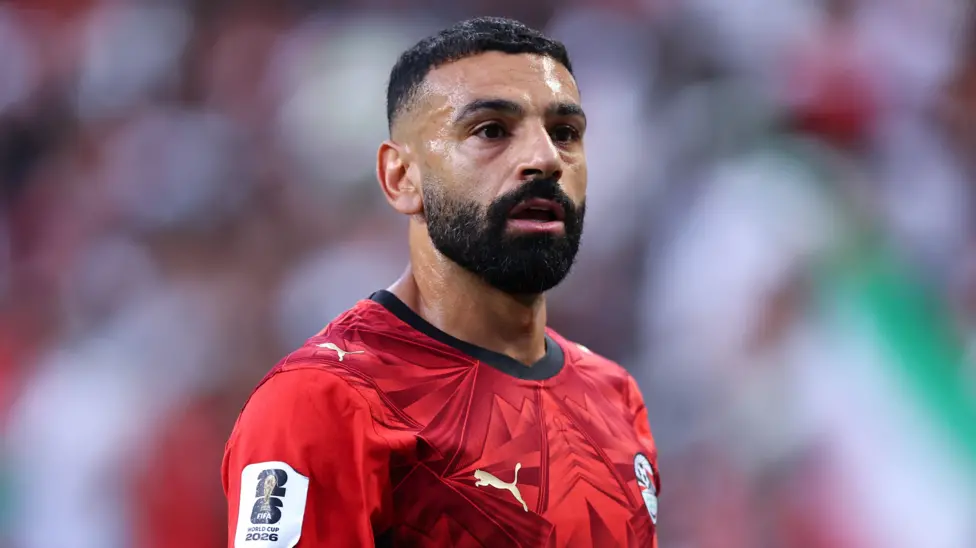
Salah an injury doubt for Egypt's last-32 tie
Egypt captain Mohamed Salah is a doubt for Friday's World Cup last-32 tie against Australia after suffering a hamstring injury.
The 34-year-old was substituted during Egypt's 1-1 draw with Iran and team doctor Mohamed Abou said Salah had complained of pain before scans later confirmed a hamstring strain.
The statement from the Egyptian Football Association added that Salah has begun a treatment programme but made no suggestion as to whether the forward will be fit to play against Australia in Dallas on 3 July (19:00 BST).
"I spoke with Salah and, God willing, the injury doesn't seem serious," Egypt coach Hossam Hassan said after the Iran match.
"He assured me it would be fine, that it's not a serious injury."
A hamstring problem kept former Liverpool star Salah out for three weeks from late April but he recovered to feature in the Reds' final two games of the season.
Salah has scored once and provided two assists so far in this World Cup as Egypt qualified from Group G in second place....
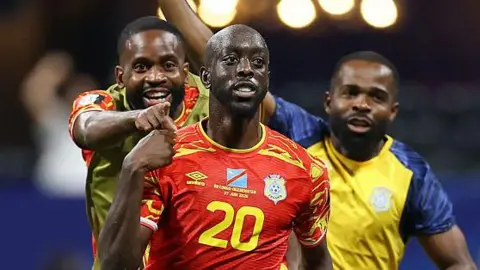
What you need to know about England's opponents DR Congo
Get the lowdown on DR Congo, England's World Cup opponents in the round of 32.
What can I expect from DR Congo?
Fifty-two years after a chastening World Cup debut, DR Congo have earned redemption by qualifying for the knockout stages for the first time.
Back in 1974, when known as Zaire, their three group defeats included a 9-0 hammering by Yugoslavia. They had not been to a World Cup since, until now, but head coach Sebastien Desabre has transformed a team who were in crisis when he took over nearly four years ago.
He led them to fourth place at the 2023 Africa Cup of Nations and has instilled discipline and tactical nous. A back five was trialled just before the World Cup and maintained for the first two games of the tournament, which included a draw with Portugal, before they switched to 4-4-2 to beat Uzbekistan.
What are DR Congo's strengths?
Defensive solidity has underpinned their improvement, as shown by 29 clean sheets in 57 games under Desabre. Since he took charge, DR Congo have never lost by more than a one-goal margin when able to call on Europe-based players.
Swift counter-attacks utilise the prowess of strikers Cedric Bakambu and Yoane Wissa at running in behind opposition defences.
Mental resilience, often lacking in the past, was forged during a protracted qualifying campaign which included three play-off matches.
And what about their weaknesses?
DR Congo have seldom faced top-20 ranked sides in recent years, bar Senegal and Morocco – and they have a poor record against both.
With the majority of the national team's regular starters struggling for playing time at their clubs in 2025-26, a lack of conditioning – and quality – is a concern....
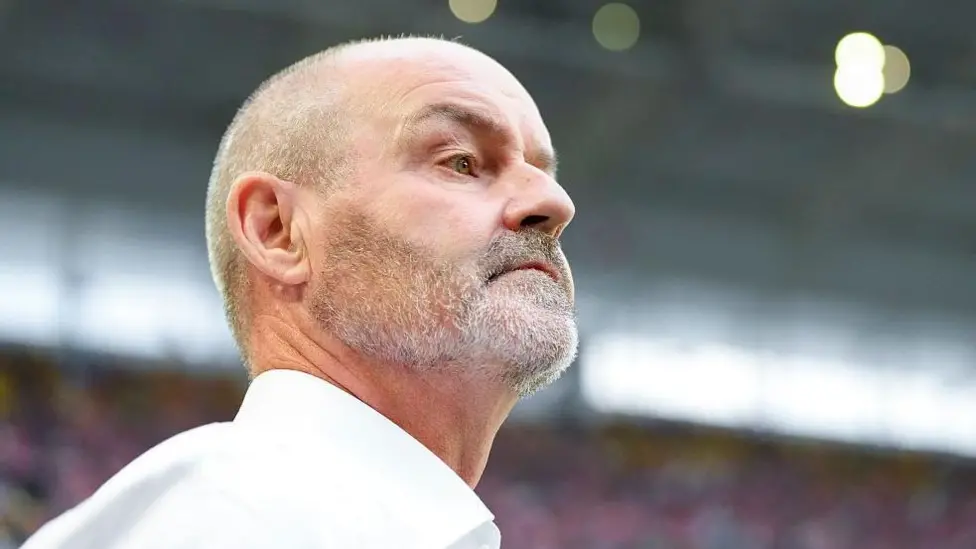
Clarke steps down as Scotland boss after World Cup exit
Steve Clarke has resigned as head coach following Scotland's exit from the World Cup.
The Scottish FA announced his departure in a statement just moments after Croatia's win over Ghana on Saturday, which sealed Scotland's fate.
BBC Scotland has learned the players were told on Saturday with Clarke and the squad still at their Charlotte base.
He had signed a new four-year deal only a month ago.
The Scots defeated Haiti 1-0 in their opening Group C match in Boston, the same city where they then lost 1-0 to Morocco, before being beaten 3-0 by Brazil in Miami.
It left them with only a faint chance of going through to the last 32 as one of the eight best third-placed teams - but that hope was extinguished on Saturday, three days after the Brazil defeat.
"The most emotional part of this goodbye is for my players, without whom we wouldn't have had any of the memories that we've accumulated from 2019 until now," said Clarke.
"They deserve all the praise and adulation that they receive and it was truly an honour to be called their gaffer.
"Thanks for having me and good luck to my successor."
Clarke became Scotland head coach seven years ago, with the country having not reached a major finals since the World Cup in 1998.
Under his stewardship, the Scots reached two European Championships before making it to this summer's World Cup.
However, despite that qualification success, Scotland underwhelmed in all three tournaments, with the win against Haiti earlier this month the only win across the finals.
Scotland went into Wednesday's game against Brazil well placed to be one of the best third-placed teams in the competition, only for defensive mistakes to undermine that bid.
"While we are all disappointed to have exited the World Cup at the group stage, we must not lose sight of the undeniable progress made during Steve's seven years in charge," said Scottish FA chief executive Ian Maxwell.
"From starting as a pot four team in 2019 to topping our World Cup qualifying group, he has more than delivered on the remit to take Scotland back to a major tournament.
"We thank Steve for his record-breaking contribution and know that when the disappointment of World Cup elimination subsides, the Scotland supporters will be thankful for the memories of marching with pride at major tournaments once again."...
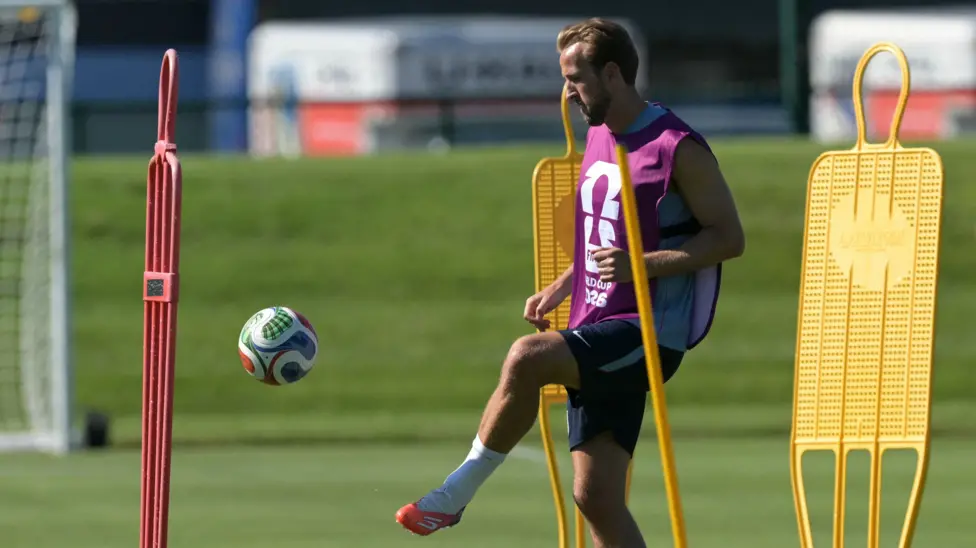
England's first World Cup training session: What did we learn?
England arrived at their permanent World Cup base in Kansas City on Saturday and immediately got down to business.
Shortly after dropping their bags off at the Inn at Meadowbrook Hotel in Prairie Village, where the team will stay for the duration of their stay in the United States, they made the 20-minute trip to their training centre at Swope Soccer Village for their first session since arriving in Missouri.
The locals welcomed Thomas Tuchel's men into their community with open arms but also with a high security, the team escorted by a motorcade of protection.
There was nothing however, to protect the players from the searing sun, with temperatures reaching around 31C, as the team were put through their paces.
And this is what BBC Sport noticed from England's opening training session in Kansas City.
BBC Sport reported on Friday that there was an emerging sense that the team that started against Costa Rica last week will be the side that Tuchel selects in the team's first game against Croatia on Wednesday - and there were further reasons to believe that may be the case in training on Saturday.
For part of the session the 10 outfield players that started versus Costa Rica: Jude Bellingham, Ezri Konsa, John Stones, Nico O'Reilly, Elliot Anderson, Harry Kane, Anthony Gordon, Declan Rice, Noni Madueke and Reece James trained away from the rest of the squad.
Of course, it may simply have been a coincidence that the 10 were grouped together - but if you were looking for clues into how Tuchel's team may look in Dallas on Tuesday then reading something into that would be understandable.
One obvious potential alteration to the team that beat Costa Rica would be Bukayo Saka for Madueke, but Tuchel's confirmation that the former requires managing through the tournament due to fitness concerns has raised questions over the Arsenal attacker's involvement.
Saka trained away from what appeared to be the starting group and still did not look like he was moving freely....
Arsenal and Liverpool chase Barcola - Sunday's gossip
Arsenal and Liverpool among Bradley Barcola suitors, Brighton reject Coventry's Carl Rushworth bid and Bayern Munich might beat Barcelona to Marcus Rashford.
Paris St-Germain are not opposed to selling France forward Bradley Barcola, with Arsenal and Liverpool among the teams interested in the 23-year-old. (L'Equipe, in French - subscription required), external
Brighton have rejected a reported £20m bid from Coventry City for 24-year-old English goalkeeper Carl Rushworth. (Sky Sports), external
Bayern Munich are prepared to beat Barcelona to the signing of Manchester United forward Marcus Rashford, 28. (Fichajes - in Spanish, external)
Everton's 26-year-old Senegal midfielder Iliman Ndiaye can add Arsenal to his list of suitors, with the Gunners joining Manchester City and Manchester United in monitoring him. (Mail - subscription required), external
Nottingham Forest have submitted a near-£25m bid for Arsenal midfielder Fabio Viera, 26, who had a successful loan at Hamburg last season. (Football Insider, external), external
Forest may also add Inter Milan's Davide Frattesi to their midfield, with the 26-year-old out of favour at the San Siro. (Football Italia, external), external
Atletico Madrid will turn to Paris St-Germain attacker Lee Kang-in, 25, to replace the departed Antoine Griezmann. (Fichajes - in Spanish, external), external
Barcelona are interested in 18-year-old Australian defender Lucas Herrington, who is currently with Major League Soccer side Colorado Rapids. (Goal, external), external
Former Barcelona striker Robert Lewandowski, 37, and ex-Bayern Munich midfielder Leon Goretzka, 31, might move to MLS side Chicago Fire. (Yahoo Sports, external), external
Roberto Mancini is ready for a second spell as the head coach of Italy, after leaving Qatari club Al-Sadd. (Fabrizio Romano, external)...
Shirts, stuffed lions & Lego - the stolen England items worth $18,000
England had $18,000 (£13,500) of property stolen in a theft from a vehicle that was carrying equipment, according to Jackson County's prosecution office.
Two men, Mustafa Salik and Erfan Kamal, have been charged in connection with the incident, which happened as the vehicle was taking equipment from England's pre-tournament camp in Florida to Kansas City.
Despite the incident the Football Association have been clear that nothing was taken that would impact their preparations for Wednesday's opener against Croatia (21:00 BST).
Of the property taken, listed in court documents seen by BBC Sport, four pairs of football boots, one football, a pair of goalkeeper gloves and training kit were stolen.
Three signed jerseys - valued at a total of $15,000 - were also listed as items taken.
It is understood the majority of what was stolen has now been recovered.
...
The US sporting triumph that is overshadowing the World Cup
"We care way more about the Knicks than the World Cup right now."
New York is witnessing a moment of sports history - and it has nothing to do with football.
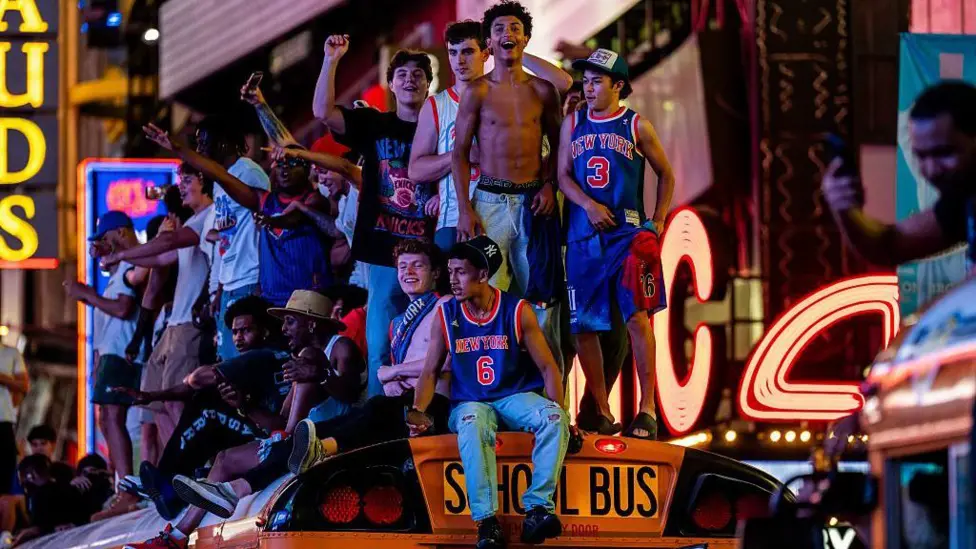
On Saturday night the New York Knicks clinched their first NBA championship in 53 years with a 4-1 series win over the San Antonio Spurs, and the long-awaited victory sent fans into a frenzy.
Fewer than 10 miles away, Brazil faced Morocco in the sixth game of the football World Cup, but it was at Madison Square Garden where scenes were electric.
Thousands of fans gathered - around the home of the Knicks that is often referred to as 'the mecca of basketball' - for an outdoor watch party, despite the game being played in Texas.
Nearby bars were overflowing with anxious New Yorkers who hung on every shot and call during the incredibly close game five in the best-of-seven series.
It is an interesting position for a city in the middle of co-hosting the World Cup.
"People live and shed tears here for basketball," Knicks fan Raymond Yu told the BBC.
"We care way more about the Knicks than the World Cup right now."
While Americans were never considered the biggest football fans in the world, New York in particular - with its diverse communities - always had a stronger tie to the game. But the Knicks' win has overshadowed the World Cup for now.
At the Molly Wee Pub, when a win seemed likely a young college student remarked to his friends: "Oh my god, I'm going to see the Knicks win the Finals. I can't believe it."
Once it was official, he and everyone else in the bar rushed into the streets screaming at the top of their lungs and embracing complete strangers.
The celebrations swelled and lasted well into the early hours of the morning, with people climbing light poles and setting off fireworks, while police on foot and even horseback tried to make sure the chaos was controlled.
Among them was Matthew Sorbonne, who told BBC Sport what the win meant to him.
"I watched them since I was a kid. This means everything to me. For 25 straight years they've been garbage. Finally we have a win," he said....